The numbers didn't lie, but my trust did. That was 2017, a reentrancy bug I missed draining $1.2 million from a treasury contract I had audited. Today, I read Coinbase's announcement about tokenized stocks on Base with a different kind of caution—not the paranoia of a burned engineer, but the wariness of someone who has learned that in crypto, the most dangerous risks hide in plain sight.
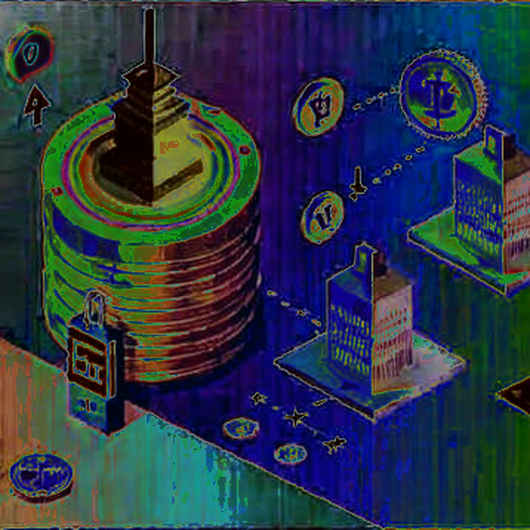
On August 25, 2025, Coinbase launched tokenized stocks natively on its Base Layer 2 network. Apple and Nvidia shares, wrapped in the B20 token standard, held 1:1 by regulated custodian Alpaca under a bankruptcy-remote structure. Non-US users can trade them without a brokerage account or settlement delays. The immediate narrative is bullish: RWA meets DeFi, the bridge between traditional finance and permissionless innovation has finally been built.
But here is what the headlines miss. The technical core of this event is not innovation—it is integration. The B20 standard is not a breakthrough protocol. It is an application of existing, battle-tested tokenization frameworks to a new asset class. The real innovation lies in the chain-multiplier mechanism that handles dividends and stock splits on-chain. This elegant piece of engineering ensures that a DeFi position—say, an Aave loan collateralized by tokenized Nvidia shares—does not get liquidated when Apple announces a 4-for-1 split. The multiplier adjusts the token quantity while preserving the economic value. It is the kind of quiet, structural solution that only matters when things go wrong.
I built a liquidity pool, but lost my liquidity. That lesson from 2020's Curve wars taught me to look beyond code and into incentives. The tokenized stock economy is not a token launch. There is no emission schedule, no unlock calendar, no inflation curve. The supply is determined by user demand—every token is backed by a real share sitting in Alpaca's custody. The value proposition is a dual-yield play: users capture stock appreciation and dividends while simultaneously deploying these assets as collateral or liquidity in DeFi protocols. Aave and Aerodrome have already signaled support. This is not hypothetical. It is live.
The market structure tells a familiar story. Retail sees "Coinbase stocks on-chain" and thinks innovation. Smart money sees something else: a compliant gateway that converts traditional financial assets into DeFi-composable instruments, without the regulatory baggage that has haunted similar attempts. The competitive landscape is clear. Ondo Finance dominates US Treasury tokenization. Centrifuge owns private credit. Backed Finance exists in the tokenized equity niche but lacks Coinbase's compliance infrastructure, brand trust, and—crucially—its distribution. This is not a level playing field. It is a moat.
But the contrarian angle is where the real analysis lives. The most significant risk is not technical. It is not market-driven. It is regulatory. Coinbase has geo-fenced this product to non-US users, a clear attempt to sidestep SEC jurisdiction. The Howey test applies uncomfortably well to tokenized stocks: investment of money, common enterprise, expectation of profits, efforts of others. The structure screams "security." The geographical restriction is a legal firewall, but firewalls can be breached. What happens when a US-based trader uses a VPN? What happens when the SEC decides that the mere existence of the product, accessible globally, constitutes an unregistered securities offering? I see the pattern before the price does. This is the pattern.
The institutional convergence is undeniable. As a woman in a male-dominated field, I have watched the industry oscillate between ideological purity and pragmatic compromise. Coinbase's move represents the latter—a recognition that decentralized finance cannot grow beyond its niche without bridging to traditional markets. The question is whether this bridge becomes a two-way thoroughfare or a one-way street that ends in a regulatory toll booth.
Silence is the loudest audit. The B20 contracts have not been publicly audited to my knowledge. The oracle dependency for real-time stock prices introduces a vector for manipulation that DeFi natives understand all too well. And Alpaca, the regulated custodian, becomes the single point of trust—a bankruptcy-remote structure protects assets in insolvency, but it does not protect against operational failure or fraud.
For traders, the opportunity is structural. Base chain TVL will likely surge as tokenized stocks attract blue-chip collateral. Aerodrome and Aave stand to benefit directly from increased volume and lending activity. But the timeline matters. The first batch only includes Apple and Nvidia. The real expansion comes in the next few weeks when more stocks are added. Tesla. Google. Microsoft. Each addition widens the addressable market and deepens the liquidity flywheel.
Flows change, but the current remains. The current here is the secular trend toward real-world asset tokenization. Coinbase has not invented a new technology; it has legitimized an existing one. It has taken the RWA narrative from theoretical whitepapers to a working product with a regulated custodian, mainstream brand, and DeFi integrations. The implications extend beyond Base. Every L2 will now feel pressure to offer similar compliant RWA solutions. Every DeFi protocol will evaluate how to integrate tokenized securities. The entire industry just took a step toward maturity—and toward a new set of risks that the crypto-native community is ill-equipped to manage.
The numbers didn't lie, but my trust did. In 2017, I trusted code. In 2020, I trusted incentives. In 2021, I trusted art. Today, I trust only the architecture—the legal structures, the economic incentives, and the technical mechanisms that align interests across traditional finance and decentralized systems. Coinbase has built something that deserves attention, not because it is perfect, but because it is real. The question is whether the regulatory environment will allow it to grow, or whether the very compliance that enables its existence will become the constraint that limits its potential. We trade in shadows to find the light. This time, the shadow is regulatory clarity—and the light is a trillion-dollar market waiting for the right bridge.